“Rescuing all that is finest”: The Church welfare system#
2012 ward conference presentation, St. Louis Missouri South Stake
NOTES: notes for the presenter are provided thus:
This is a note for the presenter
Footnotes that look like this: [22:50] mean that this quote from Pres. Kimball is found at about 22 min. 50 s into the audio file.
Slides are available from the author as a .pptx file.
{alt: “a town in the desert”, width: 100%}
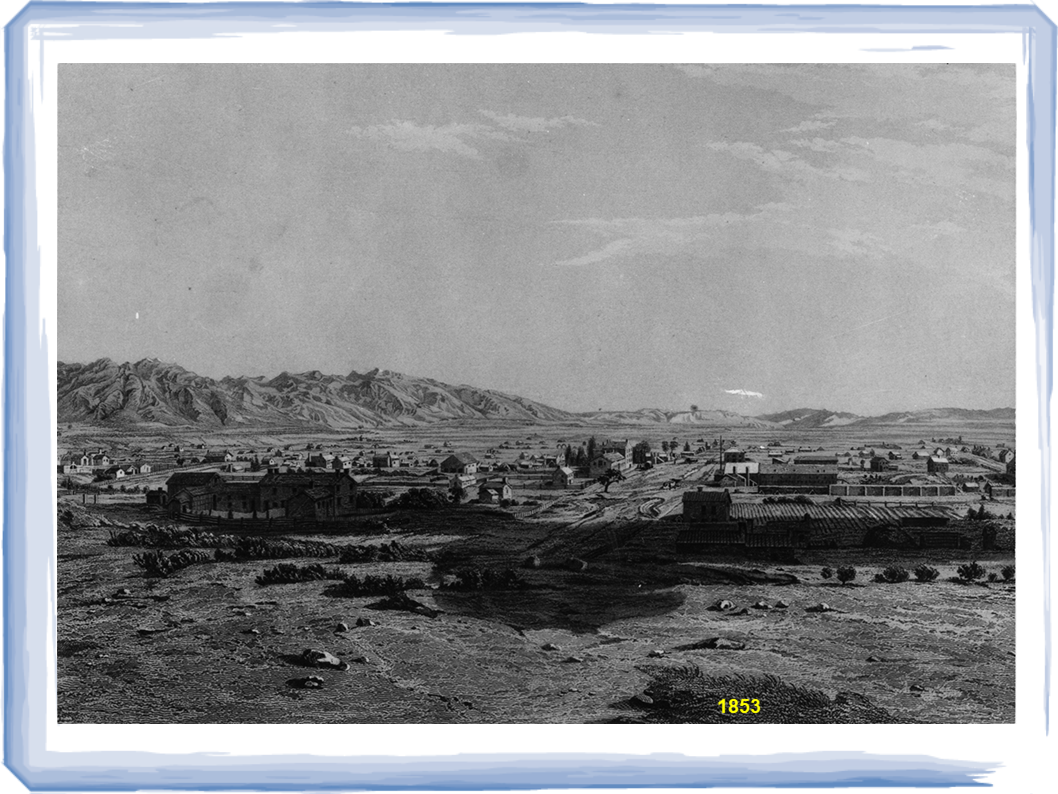
“… the vestiges of an old moat, from which was taken the earth for the bulwarks of Zion. A Romulian wall, of puddle, mud, clay, and pebbles, six miles … in length, twelve feet high, six feet broad at the base, and two and three quarters at the top, with embrasures five to six feet above the ground …”
– a nonmember traveler who visited in 18603
{alt: “SLC sketch 1860 with what may be part of the wall”, width: 100%}
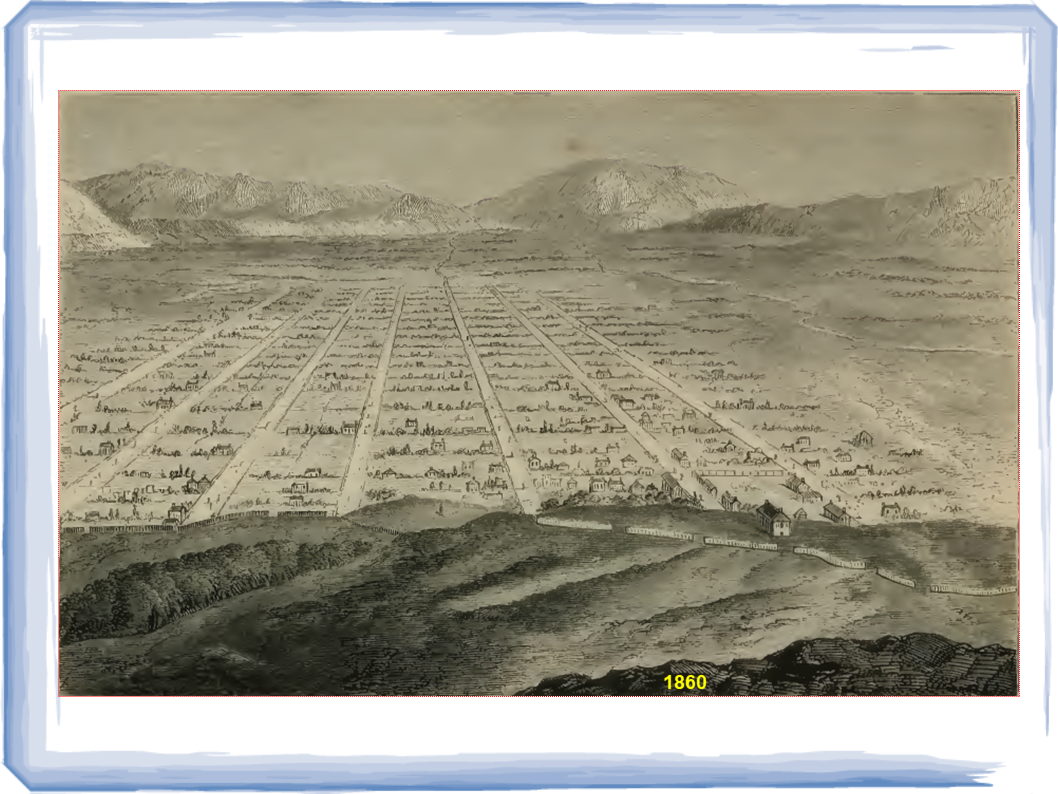
I think this engraving may show a portion of the wall (foreground, right to left).4
Why a wall?#
“Some have wished me to explain why we built an adobe wall around this city. … I build walls, dig ditches, make bridges, and do a great amount and variety of labor that is of but little consequence only to provide ways and means for sustaining and preserving the destitute. I annually expend hundreds and thousands of dollars almost solely to furnish employment to those in want of labor.
“Why? I have potatoes, flour, beef, and other articles of food, which I wish my brethren to have ; and it is better for them to labor for those articles, so far as they are able and have opportunity, than to have them given to them. They work, and I deal out provisions, often when the work does not profit me.”5
– Pres. Brigham Young, 1860
Brigham Young’s wall shows a different approach to welfare than the world generally has. The Lord tells us in section 104 that He created the world, and put enough in it to take care of everyone in the world. He said, “It is my purpose to provide for my saints, for all things are mine. But it must needs be done in mine own way.” Today I want to talk about the Lord’s approach to welfare assistance.
Goals#
What are the principles that guide Church welfare?
and, if we have time,
How does it work, in practical terms?
Doctrinal principles#
As I was praying and looking for material for this presentation, I found this 1977 talk by Pres. Spencer W. Kimball, the 12th president of the Church, and it was exactly what I was looking for. Pres. Kimball realized that a whole generation had passed since the Church welfare program had been formally instituted in the 1930’s. He felt it was important to teach this new generation of Church members the principles that underlie Church welfare.
{alt: “Spencer W. Kimball”, width: 50%, float: left}
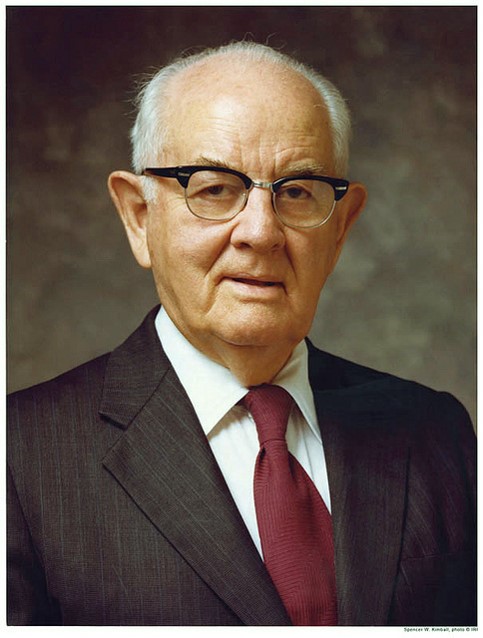
“Because of the overriding significance of this great welfare plan, I thought it appropriate to restate the fundamental truths of this work and to emphasize how we should apply these in this generation.”[2:24]
– “Welfare Services: The Gospel in Action.” General conference, October, 1977
It’s hard for me to believe, but it has now been 35 years since that talk, another generation. Pres. Kimball developed laryngeal cancer and had surgery in New York City. After his return, he joked that he had gone “away to the East, and while there I fell among cutthroats.”6 His voice after that was raspy and hoarse, but I think it helped endear him to Church members who heard him speak. Since some of you never heard Pres. Kimball, I have included some audio clips from this talk.7 [NEXT SLIDE]
1900#
Pres. Kimball started by pointing out that the principles he was going to discuss were not new even in the 1930s.8[6:56]
“You must continue to bear in mind that the temporal and the spiritual are blended. They are not separate. One cannot be carried on without the other, so long as we are here in mortality.
“The Latter-day Saints believe not only in the gospel of spiritual salvation, but also in the gospel of temporal salvation. … We do not feel that it is possible for men to be really good and faithful Christian people unless they can also be good, faithful, honest and industrious people. Therefore, we preach the gospel of industry, the gospel of economy, the gospel of sobriety.”
– Pres. Joseph F. Smith, 1900
1936#
“Our primary purpose was to set up, in so far as it might be possible, a system under which the curse of _______ would be done away with, the evils of _____ abolished, and ___________, ______, ____ and _________ be once more established amongst our people. The aim of the Church is to help the people _______________. ____ is to be reenthroned as the ruling principle of the lives of our Church membership.”9
– The First Presidency, 1936
What was happening in 1936? [Great Depression] What would be the obvious words to fill in the blanks? The curse of poverty? The curse of hunger? Compare what was really said [NEXT SLIDE].
“Our primary purpose was to set up, in so far as it might be possible, a system under which the curse of idleness would be done away with, the evils of a dole abolished, and independence, industry, thrift and self respect be once more established amongst our people. The aim of the Church is to help the people to help themselves. Work is to be reenthroned as the ruling principle of the lives of our Church membership.”
– The First Presidency, 1936
“The real long term objective of the Welfare Plan is the building of character in the members of the Church, givers and receivers, rescuing all that is finest down deep inside of them, and bringing to flower and fruitage the latent richness of the spirit, which after all is the mission and purpose and reason for being of this Church.”10
– President J. Reuben Clark, Jr., 1936
Doctrinal principles#
Love. “The measure of our love for our fellowman and, in a large sense, the measure of our love for the Lord, is what we do for one another and for the poor and the distressed.[11:54]
“Since the first dispensation of time on this earth the Lord has required his people to love their neighbors as themselves .”[3:20]
– Pres. Kimball, “Welfare Services: The Gospel in Action.” General conference, October, 1977
“And the Lord called his people ZION, because they were of one heart and one mind, and dwelt in righteousness; and ________________________.” (Moses 7:17–18.)
“And the Lord called his people ZION, because they were of one heart and one mind, and dwelt in righteousness; and there was no poor among them.” (Moses 7:17–18.)[2:24]
“Think of your brethren like unto yourselves, and be familiar with all and free with your substance, that they may be rich like unto you.” (Jacob 2:17)
[Note: The objective is not to avoid having anyone be rich, it is to avoid having anyone be poor (“no poor among them”; rather, they are to become rich like unto you).]
“For the sake of … retaining a remission of your sins from day to day, that ye may walk guiltless before God—I would that ye should impart of your substance to the poor, every man according to that which he hath, such as feeding the hungry, clothing the naked, visiting the sick and administering to their relief, both spiritually and temporally, according to their wants.”[4:10] (Mosiah 4:26.)
Modern Zion:#
“And let every man esteem his brother as himself, and practise virtue and holiness before me.
“And again I say unto you, let every man esteem his brother as himself.
“For what man among you having twelve sons, and is no respecter of them, and they serve him obediently, and he saith unto the one: Be thou clothed in robes and sit thou here; and to the other: Be thou clothed in rags and sit thou there—and looketh upon his sons and saith I am just?
“Behold, this I have given unto you as a parable, and it is even as I am. I say unto you, be one; and if ye are not one ye are not mine.”11 (D&C 38:24–27.)
Doctrinal principles#
{alt: “Dieter F. Uchtdorf”, width: 50%, float: left}
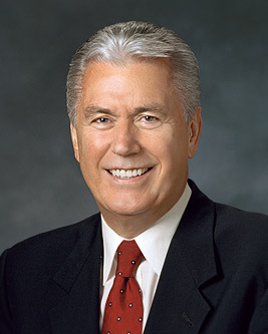
“When I was a young boy, during the aftermath of World War II, Germany was broken and in ruins. Many people were hungry, sick, and dying. I remember well the humanitarian shipments of food and clothing that came from the Church in Salt Lake City.”
– Pres. Dieter F. Uchtdorf, “‘You Are My Hands’”, General conference, April, 2010.
{alt: “canned peaches”, width: 50%, float: left}

“To this day, I can still remember the smell of the clothing, and I can still taste the sweetness of the canned peaches.”
“There were some who joined the Church because of the goods they received at that time. Some members looked down on these new converts. They even called them an offensive name: Büchsen Mormonen, or ‘Canned-Food Mormons.’ They resented these new members because they believed that once their temporal needs had been met, they would fall away.
“While some did leave, many stayed—they came to church, tasted the sweetness of the gospel, and felt the tender embrace of caring brothers and sisters. They discovered ‘home.’ And now, three and four generations later, many families trace their Church membership back to these converts.”
“I hope that we welcome and love all of God’s children, including those who might dress, look, speak, or just do things differently. It is not good to make others feel as though they are deficient. Let us lift those around us. Let us extend a welcoming hand.”
“Let us bestow upon our brothers and sisters in the Church a special measure of humanity, compassion, and charity so that they feel, at long last, they have finally found home.”
“I am not suggesting that we accept sin or overlook evil, in our personal life or in the world. Nevertheless, in our zeal, we sometimes confuse sin with sinner, and we condemn too quickly and with too little compassion.
“We know from modern revelation that ‘the worth of souls is great in the sight of God.’” (DC 18:10).
“We cannot gauge the worth of another soul any more than we can measure the span of the universe. Every person we meet is a VIP to our Heavenly Father. Once we understand that, we can begin to understand how we should treat our fellowmen.”
– Pres. Dieter F. Uchtdorf, “‘You Are My Hands’” General conference, April, 2010.
Doctrinal principles#
Service. To serve is to abase oneself, to succor those in need of succor, and to impart of one’s “substance to the poor and the needy, feeding the hungry, and suffering all manner of afflictions, for Christ’s sake.” (Alma 4:13)12
– Pres. Spencer W. Kimball
“Pure religion and undefiled before God and the Father is this, To visit the fatherless and widows in their affliction, and to keep himself unspotted from the world.”[12:54] (James 1:27)
“Service is not something we endure on this earth so we can earn the right to live in the celestial kingdom. Service is the very fiber of which an exalted life in the celestial kingdom is made.
“Oh, for the glorious day when these things all come naturally because of the purity of our hearts. In that day there will be no need for a commandment, because we will have experienced for ourselves that we are truly happy only when we are engaged in unselfish service.
“We are all self-reliant in some areas and dependent in others. Therefore, each of us should strive to help others in areas where we have strengths.
“At the same time, pride should not prevent us from graciously accepting the helping hand of another when we have a real need. To do so denies another person the opportunity to participate in a sanctifying experience.”
– Pres. Marion G. Romney13
Doctrinal principles#
Work. “Work brings happiness, self-esteem, and prosperity. It is the means of all accomplishment; it is the opposite of idleness. We are commanded to work. (See Gen. 3:19)[13:08]
“Attempts to obtain our temporal, social, emotional, or spiritual well-being by means of a dole violate the divine mandate that we should work for what we receive. Work should be the ruling principle in the lives of our Church membership.[13:25] (See DC 42:42; DC 75:29; DC 68:30-32; DC 56:17.)
– Pres. Spencer W. Kimball, “Welfare Services: The Gospel in Action.” General conference, October, 1977
“spiritual well-being by means of a dole”?
What does that mean?
{alt: “spiritual dole”, width: 100%}
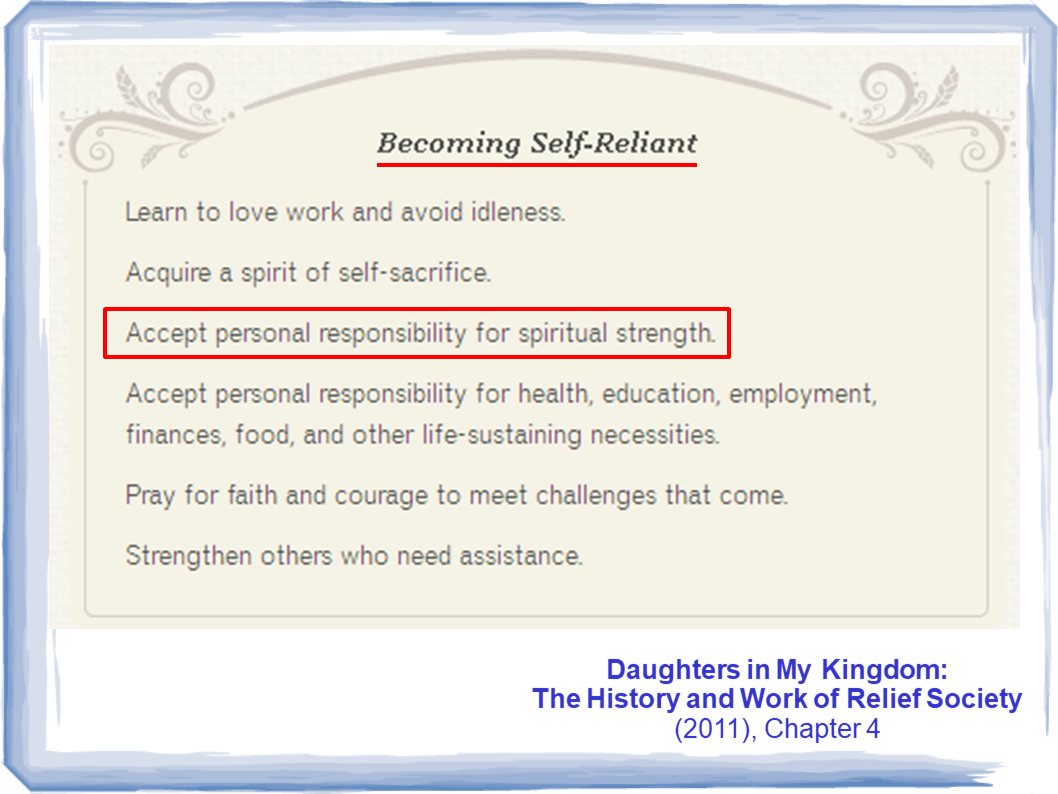
“spiritual … dole”
{alt: “Boyd K. Packer”, width: 50%, float: left}
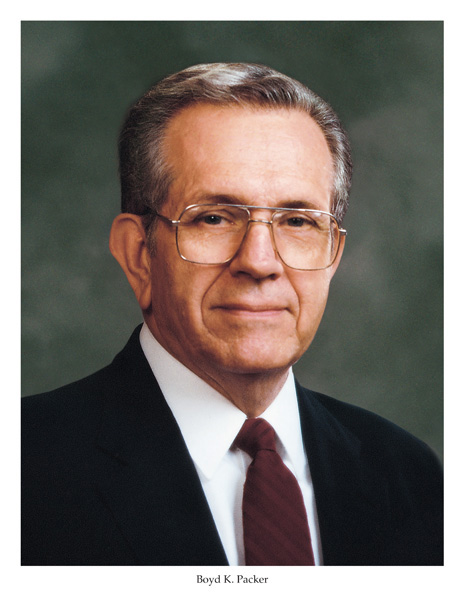
“[We can seek counsel from our parents or our bishop. However,] if we [go to our Father in Heaven in prayer], we will in most instances solve our own problems.”14
– Elder Boyd K. Packer
“Wo unto you rich men, that will not give your substance to the poor, for your riches will canker your souls; and this shall be your lamentation in the day of visitation, and of judgment, and of indignation: The harvest is past, the summer is ended, and my soul is not saved!
“Wo unto you poor men, whose hearts are not broken, whose spirits are not contrite, and whose bellies are not satisfied, and whose hands are not stayed from laying hold upon other men’s goods, whose eyes are full of greediness, and who will not labor with your own hands!”
Providing work vs. a dole
“Why? I have potatoes, flour, beef, and other articles of food, which I wish my brethren to have ; and it is better for them to labor for those articles, so far as they are able and have opportunity, than to have them given to them. They work, and I deal out provisions, often when the work does not profit me.”
– Pres. Brigham Young, 1860
Doctrinal principles#
{alt: “Spencer W. Kimball”, width: 50%, float: left}
Self-reliance. The Church and its members are commanded by the Lord to be self-reliant and independent.[13:48] (See DC 78:13-14.)
– Pres. Spencer W. Kimball
Self-reliance is a gospel principle?
Compare a parent planning for a child’s future needs when she is no longer living at home.
You want to make sure she has food and shelter.
But you also want to help her develop her skills, reach her potential … including her potential to serve others.
“The objectives of Church welfare assistance are to strengthen needy members as follows:
“1. Help them become self-reliant and stand independent of all welfare assistance, regardless of its source.
“2. Help them become stronger spiritually and learn to provide for others.
“3. Help them maintain their self-respect and dignity”
– Church Handbook of Instructions, vol. 1, § 5.2.215
“Can we see how critical self-reliance becomes when looked upon as the prerequisite to service, when we also know service is what godhood is all about? Without self-reliance one cannot exercise these innate desires to serve.
“How can we give if there is nothing there? Food for the hungry cannot come from empty shelves. Money to assist the needy cannot come from an empty purse. Support and understanding cannot come from the emotionally starved.
“Teaching cannot come from the unlearned. And most important of all, spiritual guidance cannot come from the spiritually weak.
– Pres. Marion G. Romney, “The Celestial Nature of Self-Reliance,” General Conference, October, 1982
“As we travel and visit the people throughout the world, we recognize the great temporal needs of our people. And as we long to help them, we realize the vital importance of their learning this great lesson: that the highest achievement of spirituality comes as we conquer the flesh. We build character as we encourage people to care for their own needs.”[9:50]
“The responsibility for each person’s social, emotional, spiritual, physical, or economic well-being rests first upon himself, second upon his family, and third upon the Church if he is a faithful member thereof.
“No true Latter-day Saint, while physically or emotionally able will voluntarily shift the burden of his own or his family’s well-being to someone else. So long as he can, under the inspiration of the Lord and with his own labors, he will supply himself and his family with the spiritual and temporal necessities of life. (See 1 Tim. 5:8.)”[14:00]
– Pres. Spencer W. Kimball
“Church members are responsible for their own spiritual and temporal well-being. Blessed with the gift of agency, they have the privilege and duty to set their own course, solve their own problems, and strive to become self-reliant. Members do this under the inspiration of the Lord and with the labor of their own hands.” (Church Handbook of Instructions, vol. 2, § 6.1.1)
“President Brigham Young … wanted [the Saints] to be independent from worldly influences, both temporally and spiritually.” (Daughters in My Kingdom, chapter 4)
Doctrinal principles#
{alt: “Spencer W. Kimball”, width: 50%, float: left}
Fifth is consecration, which encompasses sacrifice. Consecration is the giving of one’s time, talents, and means to care for those in need–whether spiritually or temporally–and in building the Lord’s kingdom.[14:48]
– Pres. Kimball
Note: I believe the underlined words could be rendered: building up The Church of Jesus Christ of Latter-day Saints, and establishing Zion.
“In Welfare Services, members consecrate as they labor …, donate materials, … share their professional talents, give a generous fast offering, and respond to ward and quorum service projects. They consecrate their time in their home or visiting teaching. We consecrate when we give of ourselves.16
– Pres. Spencer W. Kimball
Fast offerings#
{alt: “Jesus and the rich young man, by Heinrich Hofmann”, width: 100%}
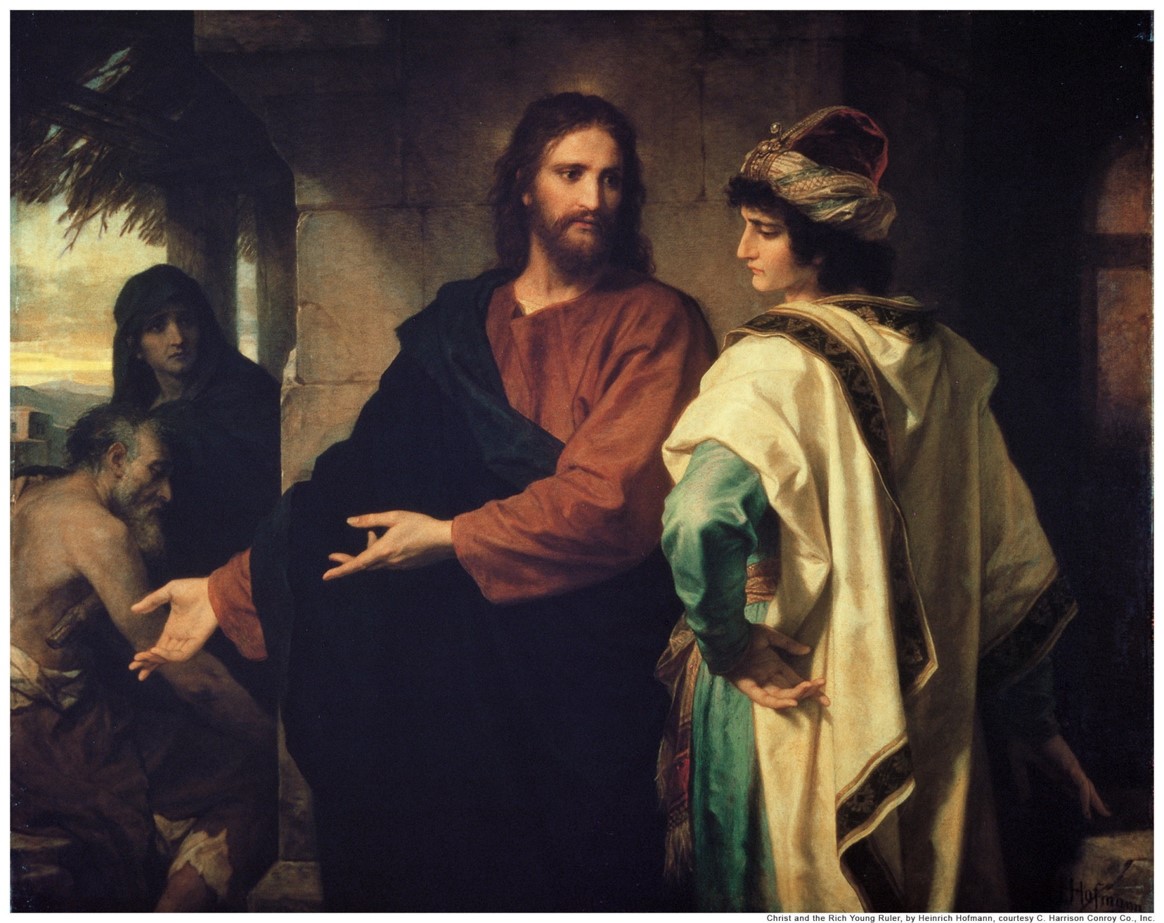
“Let’s also teach our obligations relative to the law of the fast. Each member should contribute a generous fast offering for the care of the poor and the needy. This offering should at least be the value of the two meals not eaten while fasting.”[21:52]
– Pres. Spencer W. Kimball
Penurious
Extremely stingy; parsimonious; miserly.
“Sometimes we have been a bit penurious and figured that we had for breakfast one egg and that cost so many cents and then we give that to the Lord. I think that when we are affluent, as many of us are, that we ought to be very, very generous. …”[22:14]
“I think we should … give, instead of the amount saved by our two meals of fasting, perhaps much, much more— ten times more when we are in a position to do it.”17
“Fast offerings have long constituted the means from which the needs of the Lord’s poor have been provided. It has been, and now is, the desire and objective of the Church to obtain from fast offerings the necessary funds to meet the cash needs of the welfare program.”[22:50]
If we give a generous fast offering, we shall increase our own prosperity both spiritually and temporally.[23:19]
– Pres. Spencer W. Kimball
“The foundation of provident living is the law of the tithe. The primary purpose of this law is to help us develop faith in our Heavenly Father and His Son, Jesus Christ. Tithing helps us overcome our desires for the things of this world and willingly make sacrifices for others.”
– Elder Robert D. Hales18
Offerings and consecration
{alt: “daughter alive”, width: 100%}

I realized in 2011 that by asking me to give back over the years some of what He had given me as tithes and offerings, the Lord had helped me learn that everything we have is His (even our loved ones), and that we need to be ready to give back whatever He asks us for. Tithing had helped prepare me for one of the most difficult situations of my life. (My daughter had been in the ICU for 2 months earlier that year with viral pneumonia and complications, and needed CPR twice.)
Doctrinal principles#
{alt: “Spencer W. Kimball”, width: 50%, float: left}
Stewardship. “In the Church a stewardship is a sacred spiritual or temporal trust for which there is accountability. Because all things belong to the Lord, we are stewards over our bodies, minds, families, and properties.[15:40] (See DC 104:11-15.)”
A faithful steward is one who exercises righteous dominion, cares for his own, and looks to the poor and needy.[16:00] (See D&C 104:15-18.)
– Pres. Spencer W. Kimball
Provident Living#
A faithful steward is one who exercises righteous dominion, cares for his own, and looks to the poor and needy.
– Pres. Spencer W. Kimball
“As you know, in the recent past we have placed considerable emphasis on personal and family preparedness. I hope that each member of the Church is responding appropriately to this direction. I also hope that we are understanding and accentuating the positive and not the negative.[17:25]
“I like the way the Relief Society teaches personal and family preparedness as “provident living.” This implies the husbanding of our resources, the wise planning of financial matters, full provision for personal health, and adequate preparation for education and career development, giving appropriate attention to home production and storage as well as the development of emotional resiliency.[17:48]
Garden[18:22]—not just food; family togetherness, law of harvest, “extend to our children their pioneer heritage”
Budget—planning, generosity
Literacy—We speak of literacy and education in terms of being prepared for a better occupation, but we cannot underestimate the present pleasure of our reading in the scriptures, Church magazines, and good books of every kind.[19:54]
“We teach of emotional strength in terms of family prayer, kind words, and full communication, but we quickly learn how pleasant life can be when it is lived in a courteous and reinforcing atmosphere.[20:16]
“In like manner we could refer to all the components of personal and family preparedness, not in relation to … disaster, but in cultivating a life-style that is on a day-to-day basis its own reward.
From a member:
“Following Christ and belonging to His Church isn’t easy, but definitely worth it. … This Church has at its core not only what we may become, but also how to get there. The joy, peace, and blessings I experience by actively participating in my faith far outweigh any difficulty in doing my best to live by its teachings.”19
Provident living: needs vs. wants#
{alt: “Robert D. Hales”, width: 50%, float: left}
“Whenever we want to experience or possess something that will impact us and our resources, we may want to ask ourselves, ‘Is the benefit temporary, or will it have eternal value and significance?’
“Truthfully answering these questions may help us avoid excessive debt and other addictive behavior.
“I have learned that the three most loving words are ‘I love you,’ and the four most caring words for those we love are ‘We can’t afford it.’”
“These two lessons are the essence of provident living. When faced with the choice to buy, consume, or engage in worldly things and activities, we all need to learn to say to one another, ‘We can’t afford it, even though we want it!’ or ‘We can afford it, but we don’t need it—and we really don’t even want it!’”
– Elder Robert D. Hales18
“Let’s do these things because they are right, because they are satisfying, and because we are obedient to the counsels of the Lord. In this spirit we will be prepared for most eventualities, and the Lord will prosper and comfort us.[20:54]
“I hope that in our priesthood quorums and Relief Society meetings the concepts of personal and family preparedness are being properly taught and with the kind of positive approach that we all respond to.[21:34]
– Pres. Spencer W. Kimball
The Lord’s storehouse#
“A faithful steward is one who exercises righteous dominion, cares for his own, and looks to the poor and needy.
“It is my purpose to provide for my saints, for all things are mine.
“But it must needs be done in mine own way.” (DC 104:15-16)
“This is the way that I, the Lord, have decreed to provide for my saints, that the poor shall be exalted, in that the rich are made low.” (DC 104:16)
Poor “exalted”?
Rich “made low” … how?
“the poor would be exalted, or in other words stimulated to success and pride, and uplifted because …
“… the rich have been made low, or in other words, because the rich have been made humble and willing to give of their substance, their time, and their talent, and their wisdom, and their example that the poor might be thus guided and directed.”
– Pres. Harold B. Lee, 194120
Doctrinal principles#
“These offerings are “to be cast into the Lord’s storehouse, … every man seeking the interest of his neighbor, and doing all things with an eye single to the glory of God” (Doct. & Cov. 82:18-19). The bishop is the agent of the Lord’s storehouse.
“In some locations the Church has established buildings called bishops’ storehouses. When members receive permission from their bishop, they may go to the bishops’ storehouse to obtain food and clothing.
“But the Lord’s storehouse is not limited to a building used to distribute food and clothing to the poor. It also includes Church members’ offerings of time, talents, compassion, materials, and financial means that are made available to the bishop to help care for the poor and needy. The Lord’s storehouse, then, exists in each ward.”21
Blessings of faithful stewardship#
“As givers gain control of their desires and properly see other needs in light of their own wants, then the powers of the gospel are released in their lives. They learn that by living the great law of consecration they insure not only temporal salvation but also spiritual sanctification.[10:20]
“And as a recipient receives with thanksgiving, he rejoices in knowing that in its purest form—in the true Zion—one may partake of both temporal and spiritual salvation. Then they are motivated to become self-sustaining and able to share with others.[10:46]
“Isn’t the plan beautiful? Don’t you thrill to this part of the gospel that causes Zion to put on her beautiful garments? When viewed in this light, we can see that Welfare Services is not a program, but the essence of the gospel. It is the gospel in action.
“It is the crowning principle of a Christian life.[11:12] (Emphasis in original.)
– Pres. Spencer W. Kimball
“A faithful steward is one who exercises righteous dominion, cares for his own, and looks to the poor and needy.”
– Pres. Spencer W. Kimball
“He that is a faithful and wise steward shall inherit all things.”
– Doctrine and Covenants 78:22
“When Church members are doing all they can to provide for themselves but cannot meet their basic needs, generally they should first turn to their families for help. When this is not sufficient or feasible, the Church stands ready to help.”22
When Church members are doing all they can to provide for themselves but cannot meet their basic needs, generally they should first turn to their families for help. When this is not sufficient or feasible, the Church stands ready to help.
Church Handbook of Instructions, vol. 2
How it’s done#
Basic welfare principles for providing assistance
Seek out the poor
Promote personal responsibility
Sustain life, not lifestyle
Provide commodities before cash
Give work opportunities23
{alt: “Pres. Monson visiting the sick”, width: 50%, float: left}

“We assist with basic life-sustaining goods and services, not the maintenance of current living standards. Individuals and families may need to alter their standards of living in doing all they can to meet their own needs.”24
– Pres. Thomas S. Monson
Church assistance always has a goal in mind.
A real goal.
Intended to be met.
“Mormons accept the principles of LDS Church assistance more readily,” says Ned Hill, former dean of the Marriott School of Management at BYU, “because we are taught that it is temporary and designed to help one be self-sufficient.”25
Short-term needs vs. long-term needs
Short-term needs are often met by the bishop in consultation with the Relief Society president. “Church assistance is normally given to meet temporary needs.”
{alt: “bishop”, width: 45%, float: left}

{alt: “RS Pres.”, width: 45%, float: right}

Long-term needs are most often met by the elders quorum and Relief Society through ministering brothers and sisters. “Work with the priesthood quorums and Relief Society to find permanent solutions to long-term problems.”26
{alt: “ministering brothers”, width: 45%, float: left}
{alt: “ministering sisters”, width: 45%, float: right}

This division is not complete.27
“Even the handicapped, aged, and others who may require long-term assistance should be given opportunities to do all they can to help themselves.”28
This will of course require discernment, wisdom and tact on the part of the ward leaders; see also the church handbook on this point.
Implementation principles for ward leaders#
{alt: “Spencer W. Kimball”, width: 50%, float: left}
“In providing for the needs of members:
make adequate provision for those who receive Church assistance to work or serve, according to their ability, for what they receive.[23:50]
Follow the Spirit in knowing to what extent individuals and families can and should care for themselves on their own.[24:22]
Use local resource persons to the fullest extent possible.[24:32]
Regularly hold effective Welfare Committee meetings.”[24:40]
Training resources#
Handbooks
Conference talks
Downloadable multimedia training presentations
Glen L. Rudd, Pure Religion: The Story of Church Welfare Since 1930. Church of Jesus Christ of Latter-Day Saints, 1995.
“These principles govern welfare services activities. May we all learn, obey, and teach these principles. Leaders, teach them to your members; fathers, teach them to your families. Only as we apply these truths can we approach the ideal of Zion.”[16:10]
“Brothers and sisters, with these thoughts in mind may I urge you to go forward in this great work.”[24:48]29
“You leaders presently serving are as great as or greater than those of this past generation. Learn your lessons well. Emulate the Savior in your life by serving and consecrating, by overcoming temporally so that you might more fully achieve spiritually.”[25:14]
“If we all so labor, then it will eventually be written of us that ‘surely there could not be a happier people among all the people who had been created by the hand of God.’”[25:36]
END#
One more quote: “The … Church is not satisfied with any system which leaves able people permanently dependent, and insists, on the contrary, that the true function and office of giving, is to help people [get] into a position where they can help themselves and thus be free.”30
– Elder Albert E. Bowen
- 1
Great Salt Lake City in 1853. Looking south. Engr. by C. Fenn in Frederick Piercy, Route from Liverpool to Great [Salt?] Lake Valley, 1855. Library of Congress reproduction number: LC-USZ62-8150 http://www.loc.gov/pictures/resource/cph.3a10766/
- 2
Citation for Pres. Young’s invitation: B.H. Roberts [Americana, Volume 8, Part 1, By American Historical Company, National Americana Society, American Historical Society, this chapter pp. 343-365, see also pp. 262-304 and 365-…], who quotes from History of B.Y., manuscript entry for Aug. 1853, pp. 99-100, and Millennial Star, Vol. XV, p. 738. See also Bagley W, “A Great Wall Once Circled Salt Lake City,” Salt Lake Tribune, 11/25/2001, p. B1 (who disparages this interpretation but gives some additional factual information).
- 3
Richard F. Burton, The City of the Saints, and Across the Rocky Mountains to California, New York: Harper & Brothers, 1862, chap. 3, pp. 196ff: (http://ia600408.us.archive.org/29/items/cityofsaintsacro00burt/cityofsaintsacro00burt.pdf)
- 4
GREAT SALT LAKE CITY FROM THE NORTH … Frontispiece. From Richard F. Burton, The City of the Saints, and Across the Rocky Mountains to California, New York: Harper & Brothers, 1862 (http://ia600408.us.archive.org/29/items/cityofsaintsacro00burt/cityofsaintsacro00burt.pdf). The trip was done in 1860: “… from St. Joseph, Mo., via Great Salt Lake City, to Carson Valley. From a Diary kept between the 7th of August and the 19th of October, 1860.” (p. 505, heading of his trip itinerary)
- 5
Quoted in Arrington LJ, Brigham Young: American Moses. Univ. of IL Press, 1986, pp. 182-183. Also quoted in Terryl Givens, The Latter-day Saint Experience in America, Greenwood Publishing Group, 2004, p. 182; note 22: Journal History of Brigham Young, 4 March 1860. Cited in Barton, “Mormon Poor Relief,” 69.
- 6
See https://www.churchofjesuschrist.org/study/ensign/1974/03/president-spencer-w-kimball-no-ordinary-man?lang=eng and http://www.collegiumaesculapium.org/Journal%2520Archives/1990_I%2520Fell%2520Among%2520Cutthroats_Spencer%2520W.%2520Kimball.pdf
- 7
Audio clips not included here. But the talk, with video, is available online at the Church’s web site: https://www.churchofjesuschrist.org/study/ensign/1977/11/welfare-services-the-gospel-in-action?lang=eng
- 8
Gospel Doctrine, Deseret Book, pp. 208–9.
- 9
Conference Report, October 1936, p. 3. ~7:50 (8:18) in the audio file
- 10
Special meeting of stake presidencies, October 2, 1936; emphasis added by KJB. ~9:16 in the audio file
- 11
~5:46 in the audio file. Note: for the evils of inequality, see also the Book of Mormon in many places, plus D&C 49:20 “it is not given that one man should possess that which is above another, wherefore the world lieth in sin.”
- 12
Spencer W. Kimball, “Welfare Services: The Gospel in Action.” General conference, October, 1977. At about 12:32 in the audio file.
- 13
Marion G. Romney, “The Celestial Nature of Self-Reliance,” Ensign, Mar 2009, 61–65 https://www.churchofjesuschrist.org/study/general-conference/1982/10/the-celestial-nature-of-self-reliance?lang=eng
- 14
Boyd K. Packer, “The Unwritten Order of Things.” BYU devotional address, 15 October 1996. The more complete quote reads: “There is an order of things as to where we go for counsel or blessings. It is simple—we go to our parents. When they are no longer available, if it is a blessing, then we may go to our home teacher. For counsel, you go to your bishop. He may choose to send you to his file leader—the stake president. But we do not go to the General Authorities. We do not write to them for counsel or suppose that someone in a more prominent position will give a more inspired blessing. … There is one authorized ‘end run’ around the bishop, the stake president, the General Authority, and everyone else in our line of authority. That is to our Father in Heaven in prayer. If we do that, we will in most instances solve our own problems.”
- 15
“The purposes of Church welfare are to help members become self-reliant , to care for the poor and needy, and to give service. (Church Handbook of Instructions, vol. 2)”
- 16
At about 15:08 in the audio file. Emphasis added by KJB.
- 17
Conference Report, Apr. 1974, p. 184. Emphasis added by KJB.
- 18(1,2)
Robert D. Hales, “Becoming Provident Providers Temporally and Spiritually.” General conference, April, 2009. https://www.churchofjesuschrist.org/study/general-conference/2009/04/becoming-provident-providers-temporally-and-spiritually?lang=eng
- 19
- 20
President Harold B. Lee, Conference Report, October 1941, pp. 112–114. Quoted in Victor L. Brown, “A Vision of the Law of the Fast,” Ensign, Nov. 1977. Emphasis added by KJB.
- 21
Church Handbook of Instructions, vol. 2, § 6.1.3.
- 22
Church Handbook of Instructions, vol. 2, § 6.1.1.
- 23
“Providing in the Lord’s Way: Summary of a Leader’s Guide to Welfare,” Providing in the Lord’s Way: Summary of a Leader’s Guide to Welfare (2009), 1–8. https://www.churchofjesuschrist.org/manual/providing-in-the-lords-way-summary/providing-in-the-lords-way-summary?lang=eng
- 24
Thomas S. Monson, “Guiding Principles of Personal and Family Welfare,” Ensign, Sept. 1986, p. 5. (Thanks to Paul Jarvis for the quote.)
- 25
Peggy Fletcher Stack, “Mormon views of wealth, welfare and the economy.” The Salt Lake Tribune. First published Jan 01 2012 07:07PM; Updated Jan 2, 2012 09:52PM.
- 26
“Many short-term problems are caused by long-term difficulties such as poor health, lack of skills, inadequate education or employment, lifestyle habits, and emotional challenges. Melchizedek Priesthood and Relief Society leaders have a special responsibility to help members address these concerns. Their goal is to address long-term concerns in ways that lead to lasting change.” (Handbook 2, section 6.2.4) “To gain a better understanding of how to help, Melchizedek Priesthood and Relief Society leaders normally visit members who have welfare needs. They may use the Needs and Resources Analysis form or otherwise follow its principles to help members plan ways to respond to welfare needs. As leaders help members respond to long-term needs, they counsel with the bishop. In some cases, Melchizedek Priesthood and Relief Society leaders work together.”
- 27
Photos from http://lds.org/service/serving-in-the-church/caring-for-the-poor-and-needy/getting-started?lang=eng and from https://lds.org/relief-society/daughters-in-my-kingdom/manual/pure-religion-watchcare-and-ministering-through-visiting-teaching?lang=eng
- 28
From Caring for the Needy: Study Guide: Part 2 The Bishop seeks out and cares for the Needy. The following text is found under the heading “Render Assistance”: “To decide what help to give, you will first need to determine the extent to which individual and family resources have been used. Welfare assistance is given to help people help themselves, to develop independence, not dependence. Seek to build integrity, self-respect, dignity, and soundness of character in each person assisted, leading to complete self-reliance. … 3. Give temporary help. Church assistance is normally given to meet temporary needs. Work with the priesthood quorums and Relief Society to find permanent solutions to long-term problems. Even the handicapped, aged, and others who may require long-term assistance should be given opportunities to do all they can to help themselves.”
- 29
Note: The next sentence in the original reads: “So much depends upon our willingness to make up our minds collectively and individually that present levels and performance are not acceptable, either to ourselves or the Lord.”
- 30
Albert E. Bowen, The Church Welfare Plan, (Gospel Doctrine course of study, 1946), 77. Quoted in Marion G. Romney, “The Celestial Nature of Self-Reliance,” Ensign, Mar 2009, 61–65.